Satis Manor
Great ExpectationsSatis House is the decaying estate where Miss Havisham has made a private world out of halted time and ruined expectation. First seen by Pip as an intimidating, shuttered house with a long-disused brewery, it becomes the setting for his humiliation by Estella, his entanglement in Miss Havisham’s designs, and, years later, his return to her in loneliness and flames. Its rooms do not merely contain the past: their darkness, dust, and abandoned wedding things make that past seem still in progress.
Setting and Names
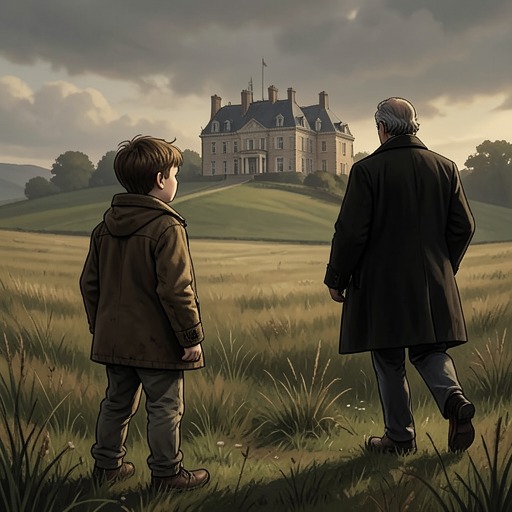
When Pip first arrives with Mr. Pumblechook, the old brick house stands behind many iron bars. Some windows have been walled up; the remaining lower ones are rustily barred, and a barred courtyard gate keeps visitors waiting. At the house’s side is a large brewery where no brewing is taking place and apparently has not taken place for a long time. The estate’s first impression is thus one of enclosure and suspended use: its buildings remain, but the work and ordinary life they once supported have stopped.
The house has more than one name. Miss Havisham explains that one is Satis, meaning “enough”: the name once expressed the belief that whoever owned the estate could want nothing more. Pip’s understanding of the name sits against the present condition of the house, where an ample property has become a place of deprivation and decay. Miss Havisham also refers to it as the Manor House and says that its cellars already contain enough strong beer to drown it. The brewery’s abundance is inert rather than productive; the buildings will stand idle until they fall.
Architecture of Suspended Time
The approach to the rooms establishes a pattern of barriers and dimness. Pip and his young guide enter by a side door because two chains cross the great front entrance from outside. They pass through dark passages and climb a staircase by candlelight. At the room where the guide leaves him, Pip must knock and enter alone. Inside, by contrast with the passage, the dressing room is lit by wax candles, but no daylight reaches it. The architecture controls what can be seen and when: movement through the house becomes a passage from public enclosure into a sealed interior.
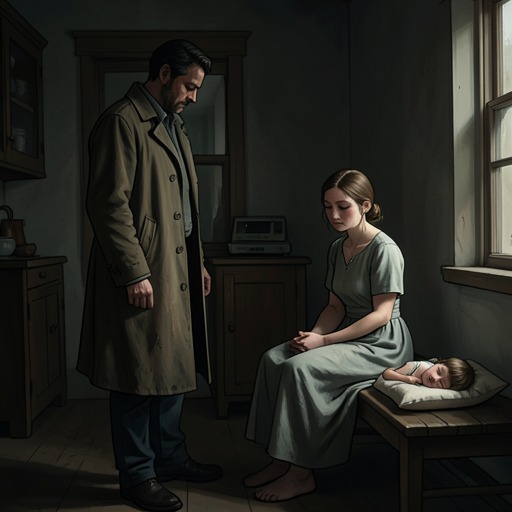
That interior preserves the appearance of a bridal preparation while displaying the damage time has done to it. Miss Havisham sits beside a dressing table, still dressed in white satin, lace, and silk, with bridal flowers in her white hair. One shoe remains unworn, her veil is only half arranged, her watch and chain have not been put on, and trinkets, gloves, flowers, a prayer-book, and half-packed trunks lie about her. The clothes and flowers have faded yellow; the dress hangs loose on a body that has withered. The room’s objects make a once-incomplete act of dressing appear never to have ended, while their deterioration records the years that the house’s arrested scene tries to deny.
The stoppage is literal as well as atmospheric. When Pip stands before Miss Havisham, he notices that both her watch and a clock in the room have stopped at twenty minutes to nine. Elsewhere, another room is airless and dusty, its fire reluctant to burn and its smoke colder than the clearer air. A long table remains spread as if a feast had been under preparation when the house and clocks stopped together; a cobweb-buried centrepiece and creatures moving among the neglected furnishings turn the abandoned room into a small, active wilderness. The house’s apparent stillness is not clean or empty: it is a stillness gradually taken over by dust, mould, spiders, mice, and decay.
Pip, Estella, and the House’s Influence
Satis House is where Pip first encounters Estella as a figure of beauty and social power. She guides him across the overgrown courtyard, speaks to him dismissively as a boy, and leaves him outside the room where he is to meet Miss Havisham. Later, Miss Havisham calls Estella close, tests a jewel against her, and asks her to play cards with Pip. Estella objects that he is a common labouring boy; Miss Havisham’s answer makes plain the cruel purpose for which the estate’s young visitor is being used. The house joins Pip’s social humiliation to the spectacle of wealth: the jewels, bridal finery, and imposing rooms sharpen his awareness of his own position rather than offering him a place within them.
That first visit becomes part of Pip’s long attachment to the estate and to Estella. Years later, sitting with her in the familiar, dreamy room, he recognizes how inseparable she has become from his childhood longings for money and gentility, his shame about home and Joe, and the fantasies through which he had imagined her face appearing in darkness or in the firelight of the forge. Miss Havisham sends Pip and Estella into the neglected garden and asks him afterward to wheel her about, as in earlier days. In the garden, Estella recalls hiding to watch Pip’s fight with the pale young gentleman, now Herbert. The estate holds not only Miss Havisham’s preserved bridal past but also Pip’s own accumulated memories, including episodes whose meaning changes as he grows older.
The house’s influence is therefore bound to the discrepancy between its promise and its reality. Its name evokes satisfaction and its rooms contain costly objects, yet it is a scene of disuse, emotional manipulation, and physical deterioration. For Pip, the beauty and grandeur he associates with Estella are entangled with the experience of being treated as socially inferior. The estate gives his aspirations a place to gather, even as its decay exposes the damage inside the world he once mistook for a path to gentility.
Later Returns and the Fire
On a later return, Pip uses Miss Havisham’s note as his credential and approaches quietly, walking from the Halfway House by less frequented ways. The old passage still holds a lit candle, and he climbs the stairs alone. He finds Miss Havisham in the larger room, seated in a ragged chair before the ashy fire. The loneliness of the room moves him to pity; he thinks that time has made him, too, part of the house’s ruined fortunes. Her question about whether he is real and his immediate answer emphasize how sharply the visit breaks into her isolation.
After the conversation, Pip leaves at twilight with the sense that he may never see the estate again. He walks past the old casks, rotted by years of rain and holding miniature pools, and circles the ruined garden by the places associated with Herbert and Estella. On his way back through the brewery, the damp, swollen wood and fungus-covered threshold bring back a childhood association: for a moment, he imagines Miss Havisham hanging from a beam. The apparition is a fancy, not an event, but it shows how thoroughly the estate’s remembered spaces have fused with Pip’s fears and memories.
When Pip turns back to make sure Miss Havisham is safe, he sees her running toward him with her bridal dress ablaze. He throws his coats over her and drags down the tablecloth to smother the flames. The dress that had once embodied the house’s arrested wedding becomes, in an instant, a source of immediate physical danger. In rescuing her, Pip acts within the same rooms that had shaped his childhood humiliation and fantasies; the estate’s most persistent image is no longer simply preserved decay, but a crisis that requires him to respond with care.
Narrative Significance
Satis House works as a gothic setting because its physical layout turns private history into an environment Pip must enter and move through: barred gates, chained doors, dark passages, candlelit chambers, a sealed wedding room, and neglected outdoor spaces. Its uncanny effects remain grounded in the material world of the novel. Pip’s brief vision of Miss Havisham at the brewery beam is explicitly a fancy, while the fire is real and leaves him struggling to save her. The distinction makes the house’s power psychological as well as physical: memory can transform its ruins into an apparition, but its danger also arrives through ordinary flame and decaying objects.
Across Pip’s visits, the estate’s meaning shifts without losing its atmosphere of arrested time. At first it is an intimidating destination and the stage for his encounter with Estella; later it becomes the setting where he revisits the childhood desires it helped awaken; finally, in the return at twilight, its ruined garden and brewery frame both a memory-haunted farewell and Miss Havisham’s rescue. Its essential contradiction endures: a house named for having enough has become defined by loss, and a bridal scene preserved against time has only grown more desolate as time passes.